
Plate Circle history
MN 1: the history of the first Isle of Man number plate
By Plate Circle editorial · Last reviewed
Issued in 1906 to a steam car, recorded on a Motobloc by 1914 and sold for £100,000 in 2009, MN 1 has a history that reaches back to the beginning of compulsory vehicle registration on the island.
For a number plate collector, the appeal of MN 1 begins with a simple fact: it came first. Contemporary reporting identifies it as the Isle of Man's first vehicle registration, issued on 1 January 1906 to George Drinkwater of Kirby, Braddan. More than a century later, its auction result showed how much that place in Manx motoring history could mean to a buyer. BBC News.
The beginning of Manx vehicle registration
The Isle of Man Public Record Office dates the introduction of compulsory vehicle registration to January 1906, following Tynwald's Highways Act Amendment Act of 1905. The original series ran from MN 1 to MN 9999 and remained in use until March 1935. MN 1 therefore belongs to the very beginning of the island's registration system. Public Record Office registration history.
That date needs to be read correctly. It records the beginning of registration, rather than proving that the first holder had brought the first motor car to the island. An older car could receive a new number when the scheme began. The age of a registration, the manufacture date of its first vehicle and the arrival of motoring in a place are separate pieces of history.
The BBC's account of the 2009 sale names the first holder as George Drinkwater, from Kirby in Braddan, and describes his vehicle as a white steam car. The report supplies the exact issue date but does not identify the car's chassis or model. BBC News.
The White steam car connection
A specialist source offers a promising way to investigate the first vehicle further. The White Register lists a 1903 White Model C with George Drinkwater as its original owner. Its entry gives serial number 1050 and engine number C846. These are useful identifying details for comparison with the original registration ledger. White Register entry.
White was an American steam-car maker associated with Cleveland, Ohio. A 1903 White would fit the chronology of a car registered when the Manx system opened in 1906. That compatibility makes it a plausible lead, although the dates alone cannot establish that this particular car received MN 1. The surviving online entry should be treated as a lead rather than a completed identification: it does not reproduce a 1906 registration entry tying those vehicle numbers to MN 1. The history of a surviving vehicle and the history of a transferable registration can follow different paths. White Steamer history.
The 1914 record puts MN 1 on a Motobloc
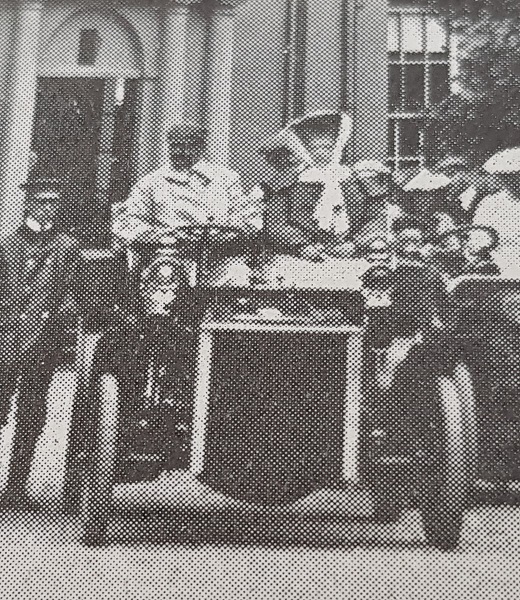
One of the most revealing pieces of evidence is a transcription of the motor-car list in the Manx Year Book for 1914. Its opening entry reads: Manx Year Book 1914 transcription.
“MN 1 G. Drinkwater, Douglas. 15 hp. Motobloc”
Here the number is associated with a different make of car. The entry supports the conclusion that MN 1 had moved beyond its original steam-car association by 1914. It also records the Drinkwater name, although the abbreviated entry alone does not supply the transfer date or a complete ownership history. The 15 hp figure is reproduced as recorded; it should not be presented as a verified modern brake-horsepower measurement.
The same publication gives a £1 motor-car registration fee, with five shillings for a motorcycle and five shillings for a driver's licence. Those are the charges printed in the 1914 source, rather than a receipt for Drinkwater's 1906 registration. They offer a striking historical contrast with the six-figure price that MN 1 would eventually command.
MN 1 and the other Manx number ones
MN 1, 1 MN and MAN 1 are distinct registrations. The order and number of letters matter, especially when photographs or sale records circulate without context. The Public Record Office's chronology separates the relevant series clearly.
| Series | Period recorded | Relevance |
|---|---|---|
| MN 1 to MN 9999 | January 1906 to March 1935 | The original series containing MN 1. |
| MAN 1 to MAN 999 | March 1935 to April 1936 | A separate three-letter series. |
| 1 MN to 9999 MN | May 1959 to October 1964 | The later reversed format. |
The archive also records the release of previously unissued numbers from the original MN range between November 1971 and May 1974. That does not make MN 1 a 1970s issue: its first issue is documented in 1906. Public Record Office registration history.
John Moore and the collection behind the sale
By the time it came to auction in 2009, MN 1 formed part of the estate of the late John Moore of Santon. Contemporary reporting placed the sale at the Mount Murray Hotel and described a wider auction of vintage and classic cars and motoring material. The registration reached the market in the context of a substantial motoring collection. Manx Radio auction report.
An auctioneer's account reproduced by Regplates adds some colour to Moore's involvement with the island. Murray Keefe recalled his classic cars providing transport for important occasions, including royal visits and Tynwald Day, and referred to Moore's charitable work involving the Poppy Appeal and the War Graves Commission. Those recollections describe Moore and his collection; they do not establish that every ceremonial journey used the vehicle carrying MN 1. The firmer point is that Keefe said he advised the executors to sell the number plates separately from the cars. Auctioneer account reproduced by Regplates.
The auction that took MN 1 to six figures
The decisive date was Friday 6 February 2009. The pre-sale estimate was £15,000 to £25,000, but contemporary news coverage reported a sale at £100,000. That was four times the upper estimate and roughly 6.7 times the lower one. The buyer chose to remain anonymous. Keefe's account describes four telephone lines with prospective bidders, as well as interest in the room. The published figure was the outcome of that sale, rather than a dealer's advertised asking price.
| Auction detail | Recorded information |
|---|---|
| Date | 6 February 2009 |
| Venue | Mount Murray Hotel, Isle of Man |
| Auctioneer | Murray's Auctioneers; Murray Keefe |
| Provenance at sale | Estate of the late John Moore of Santon |
| Estimate | £15,000 to £25,000 |
| Reported sale price | £100,000 |
| Buyer | Anonymous in contemporary reporting |
Manx Radio's follow-up on 8 February described the plate as part of the island's history and reported that all the money raised was to go to charity. That charitable purpose is a significant part of the sale's story, alongside the exceptional increase over the estimate. Manx Radio follow-up.
The familiar £100,000 should be described as the reported sale price. The cited news reports do not set out a full invoice or a breakdown of commission and other charges. A precise account of the buyer's total expenditure would require the auction result sheet or invoice, rather than an assumption about fees.
What the later photograph tells us
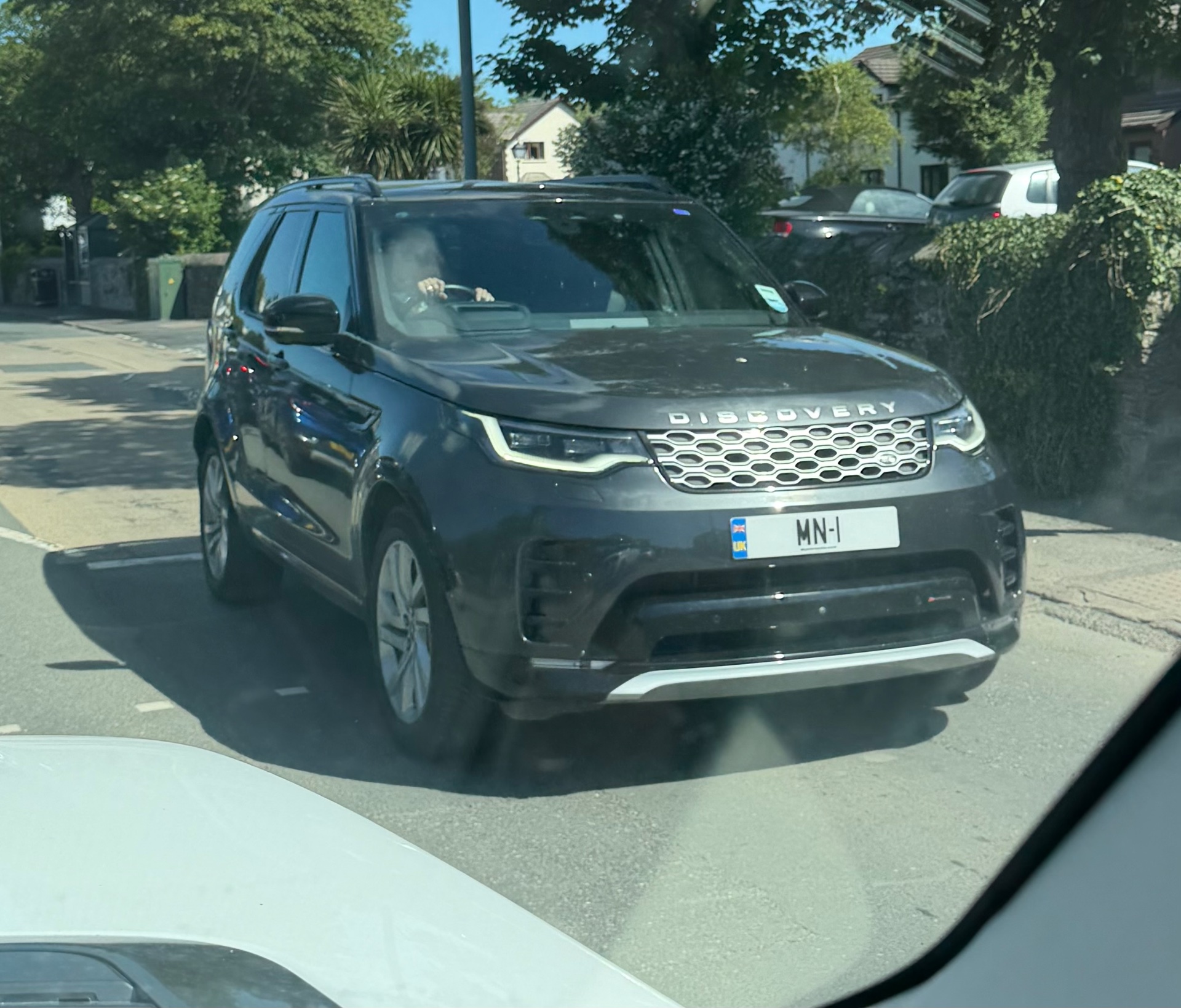
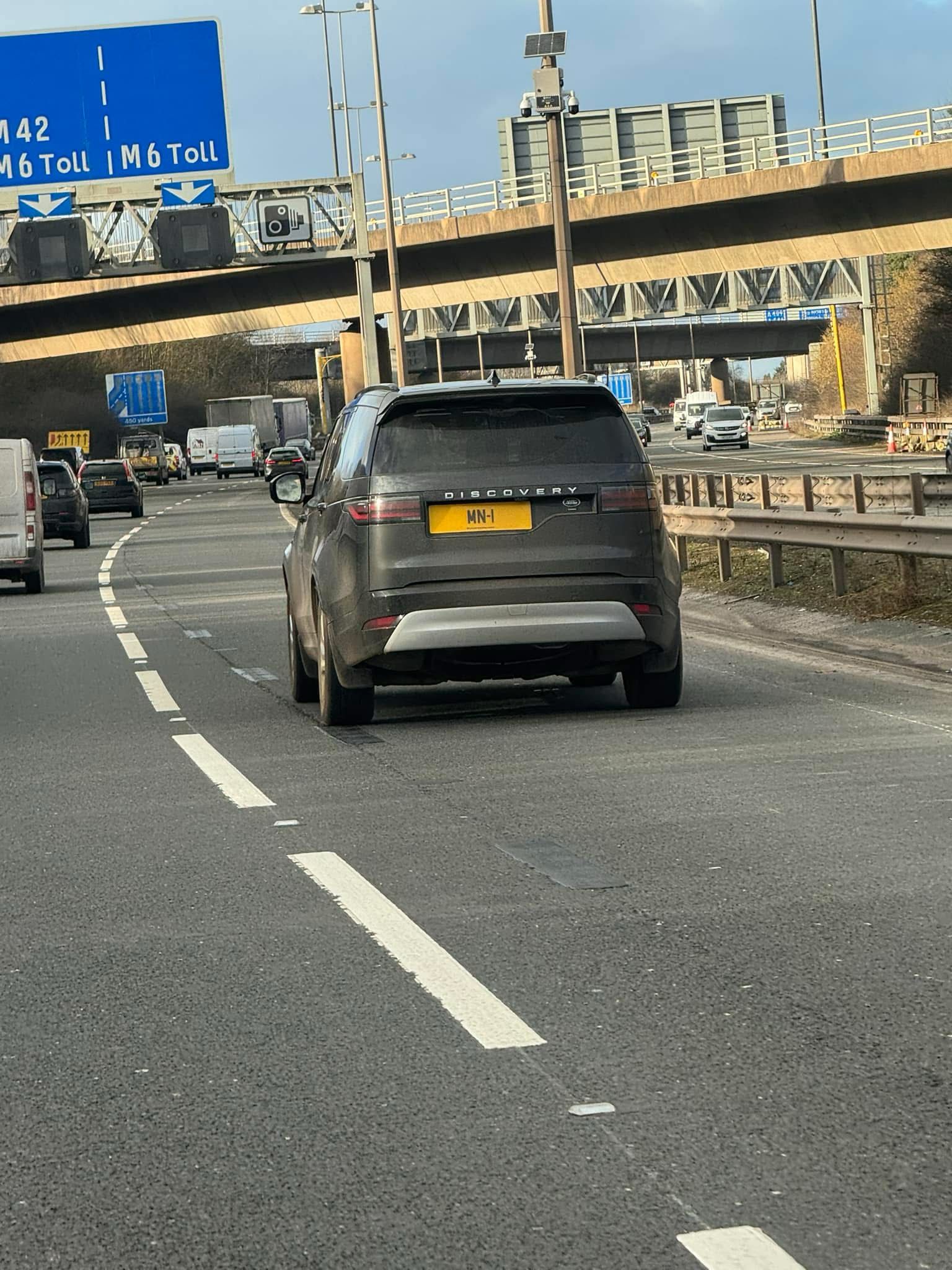
A photograph hosted by Number Plate Registry shows MN-1 on the rear of a dark Land Rover Discovery. It is a useful visual record of the registration on a modern vehicle. Its evidential limits are equally clear: the hosting page does not establish when the image was taken, who owned the vehicle, who held the registration at that date or whether the same arrangement continues. A photographed plate is a record of an appearance, not a current ownership certificate. Photograph hosted by Number Plate Registry.
Taken together, the steam-car report, the Motobloc entry and the Discovery photograph give MN 1 a story across very different vehicles. They are documented points in that story, rather than a continuous chain of transfers. There remains room for dated photographs and original paperwork to explain the intervening years.
What is MN 1 worth today?
The best-supported public price in the sources assembled for this history is the £100,000 reported in February 2009. It establishes that MN 1 achieved a six-figure result at that sale. It does not establish today's asking price, a current valuation or the amount a new auction would produce.
From a collector's perspective, the appeal is easy to understand. The mark combines a very short format with the number one and a documented first place in the island's registration history. Its 2009 sale also gives it a public market milestone. How a future buyer weighs those qualities is a matter for a future transaction; historic significance does not supply a reliable percentage return.
The Isle of Man Government publishes a separate tariff for cherished registrations. Its Band 1 covers short combinations including the MN 1 to MN 99 range. A government tariff for eligible available numbers should not be confused with the market value or availability of an already issued, individually traded mark such as MN 1. Isle of Man cherished registration guidance.
For the same reason, an online calculator's estimate should not be presented as a new sale. A credible valuation would need current evidence about availability and demand, comparable completed transactions and the terms of the proposed transfer. In MN 1's case, the documented history is stronger than any claim to a precise present-day price.
The records that could complete the history
The original vehicle register is catalogued by the Isle of Man Public Record Office as S29/2/1. Covering January 1906 to January 1922 and numbers MN 1 to MN 2309, it is the most direct archival starting point. The catalogue says the register records details including owners, vehicle descriptions and registration dates. Inspection of MN 1's actual entry could test the proposed White identification. Original register catalogue S29/2/1.
A second useful source is S29/2/3, a register covering MN 1 to MN 2997. Its catalogue warns that it was compiled by copying earlier records and that some entries were omitted. That warning makes the original volume especially important: a missing entry in the later copy would not by itself establish that a registration had disappeared. Copied register catalogue S29/2/3.
For later movements, the collection includes registration cards under S29/3/418, covering MN 1 to MN 699 from the 1920s to the 1980s. The catalogue notes that some individual cards are missing. These records may help bridge the period between Drinkwater and Moore, but their survival and the detail on the MN 1 card need to be checked. A complete ownership history will depend on the entries themselves; catalogue references identify where to look but do not supply a continuous record. Registration cards catalogue S29/3/418.
A number with a place in Manx history
MN 1's significance rests on more than the amount paid for it. The registration connects the beginning of the island's numbering system with an early steam-car owner, a 1914 Motobloc entry and a much later collector's estate. The 2009 auction gives that history a documented public moment, when an anonymous bidder paid far more than the estimate.
For Plate Circle readers, the interest lies in that combination of a simple mark and a complicated life. Three characters can remain recognisable while the cars, owners and reasons for valuing them change. MN 1 has already accumulated more than a century of history; the original ledgers may still have more to tell.